iN PHOTOS: Migrating sandhill cranes stop to rest in Okanagan, Kamloops
Sandhill cranes have been making stops at lakes in Kamloops and the Okanagan this month on their annual migration to nesting sites in the north. The big birds travel in flocks of thousands and will at first appear as tiny specks circling in the sky, then will come in for landings...
 Valandos
0
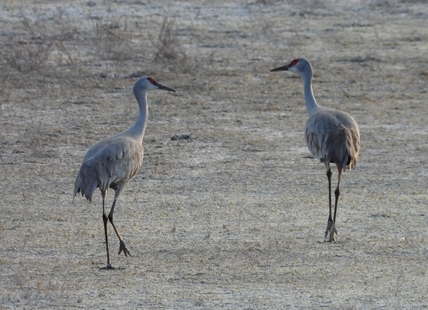
Sandhill cranes have been making stops at lakes in Kamloops and the Okanagan this month on their annual migration to nesting sites in the north.
The big birds travel in flocks of thousands and will at first appear as tiny specks circling in the sky, then will come in for landings in a noisy, calamitous riot.
“It’s an amazing experience to watch them, especially when they land,” South Okanagan wildlife photographer Shelley MacDonald told iNFOnews.ca.
The big birds are known to stop at Tranquille Lake in Kamloops, Douglas Lake Plateau in Merritt and White Lake Basin just south of Penticton every April.
MacDonald photographed the cranes at White Lake Basin for the fourth April in a row and this time used a superzoom camera.
“Last week, we watched them circle for about 30 minutes before landing, it seemed like they circled until slower groups showed up,” she said. “Then a smaller group came in almost to the point of landing but climbed back up. It was as if these were a scouting crew making sure it was safe.
“Hearing them is also a special experience. They are very communicative.”
Sandhill cranes are long-distance migrants, with three subspecies living year-round in Florida, Mississippi and Cuba and three subspecies migrating between northern North America to the southern U.S. states and Mexico, according to All About Birds.
https://www.allaboutbirds.org/guide/Sandhill_Crane/
READ MORE: iN PHOTOS: Arrowleaf balsamroot blooms in Okanagan, Kamloops
https://infotel.ca/newsitem/in-photos-arrowleaf-balsamroot-blooms-in-okanagan-kamloops/it108913
The cranes are tall with grey bodies and crimson caps, and have loud, unique cries due to their long windpipes.
They migrate in flocks of hundreds and are known to be noisy, with wide flapping wings and loud squawks.
Cranes mate for life and stay with their mates year-round. They will soon be breeding in wetlands, fields and prairies across North America.
If you have awesome wildlife photos to share, send them to news@infonews.ca
mailto:news@infonews.ca
To contact a reporter for this story, email Shannon Ainslie
mailto:sainslie@infonews.ca
or call 250-819-6089 or email the editor
mailto:news@infonews.ca
. You can also submit photos, videos or news tips to the newsroom
mailto:tips@infonews.ca
and be entered to win a monthly prize draw.
We welcome your comments and opinions on our stories but play nice. We won't censor or delete comments unless they contain off-topic statements or links, unnecessary vulgarity, false facts, spam or obviously fake profiles. If you have any concerns about what you see in comments, email the editor in the link above. SUBSCRIBE to our awesome newsletter here
https://infotel.ca/newsletter
.